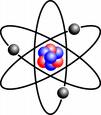
A new analysis clears some of the remaining hurdles to a completely rigorous density-functional theory for calculating the properties of materials at finite temperature.
http://physics.aps.org/articles/v3/99
Dr Prince A Ganai

Theoretical Physicist @NIT- Srinagar
Monday, February 28, 2011

Thursday, January 13, 2011
Thermal and vacuum friction acting on rotating particles
In the Casimir effect, vacuum fluctuations of the electromagnetic field exert a force on closely spaced metal plates, a phenomenon that is well understood theoretically and detectable experimentally. Can a related effect occur for rotating systems, in which vacuum fluctuations alter the spin rate of a particle, resulting in rotational drag? Writing in Physical Review A, Alejandro Manjavacas and Javier García de Abajo of the Instituto de Óptica, Madrid, Spain, show theoretically that this should be an experimentally observable effect.
The phenomenon of vacuum friction for spinning objects is somewhat different than for the static parallel plates: the accelerating charges in a spinning conductive object interact with the vacuum fluctuations and can emit photons. Earlier work by Manjavacas and García de Abajo tackled the problem with a semiclassical model that employed the fluctuation-dissipation theorem to calculate the overall energy transfer between the spinning particle and the vacuum field. In their new calculations, they take a fully quantum mechanical approach, which not only confirms the semiclassical results but extends the results to molecular systems and magnetic interactions. In addition to their intrinsic interest, the findings may be relevant to understanding the dynamical behavior of cosmic nanoparticles such as interstellar dust and the optical spectra of rotating molecules.Phys. Rev. A 82, 063827 (Published December 23, 2010)
Tuesday, December 14, 2010
A “Little Bang” arrives at the LHC
In November, the Large Hadron Collider (LHC) at CERN began its first heavy-ion run, producing lead-lead collisions with the highest center of mass energy ever achieved. Now, a pair of papers appearing in Physical Review Letters, from the ALICE [1] and ATLAS [2] experiments at the LHC, presents a first glimpse of what new information these high-energy collisions will offer about the quark-gluon plasma—the state of matter believed to have filled the universe at the time of the Big Bang. The ALICE results strongly indicate that the quark-gluon plasma remains a nearly ideal liquid, as seen earlier at the Relativistic Heavy Ion Collider (RHIC), even at significantly higher energies. Complementing this work, the ATLAS team has shown that even very high energy jets of particles emitted from the collision lose a large fraction of their energy into the quark-gluon plasma (and are sometimes completely dissipated), a sign that the quarks and gluons are strongly interacting with the hotter plasma.
Phys. Rev. Lett. 105, 252302 (2010) – Published December 13, 2010
Thursday, January 21, 2010
Sorting superfluidity from Bose-Einstein condensation in atomic gases
One of the neatest formulations of the concept of superfluidity involves the response of the fluid to rotation in the so-called “rotating bucket experiment”: while the normal component of the fluid is dragged by the bucket, the superfluid component is almost unaffected by the rotating walls . This idea was first put into practice in 1946 by Andronikashvili using a torsional oscillator and a bulk three-dimensional sample of liquid helium the appearance of a superfluid is detected by the drop in the moment of inertia . Interesting measurements of the reduced moment of inertia of atomic Bose-Einstein condensates have been performed by looking at the frequency of the so-called scissors mode in an anisotropic trap and at the time evolution of the shape of an expanding condensate after releasing the trap .
The definition of superfluid fraction can be formulated in a formal and quantitative way in terms of the response of the fluid to an external vector field . If placed in a rotating trap, neutral atoms behave in fact as if they were subject to a constant magnetic field parallel to the rotation axis; in this picture, the absence of response to rotation is the superfluid analog of the Meissner effect of superconductors in which magnetic fields are excluded from the material. Along these lines, it was soon recognized that the study of the response of the gas to artificial magnetic fields may offer a much wider range of experimental possibilities to investigate superfluidity.
Nigel R. Cooper and Zoran Hadzibabic
Phys. Rev. Lett. 104, 030401 (2010) – Published January 19, 2010
Monday, November 2, 2009
An ultracold graphene analog
Two highly active fields of physics have merged in recent years, as researchers work to build models of condensed matter systems using ultracold atoms suspended in optical lattices. Graphene provides an environment for many intriguing physics problems, with its massless fermions, unusually high carrier mobility, and anomalous quantum Hall behavior. Now, Kean Loon Lee and colleagues at the National University of Singapore, and at Ecole Normale Supérieure and Institut Non Linéaire de Nice in France, report inPhysical Review A their theoretical studies of ultracold atoms arranged in a hexagonal graphenelike optical lattice.
When atoms are loaded into optical traps researchers can control their position and the strength of their interactions. The authors model a two-dimensional honeycomb lattice of traps created by the interference of three laser beams. They then carry out tight-binding calculations of the band structure to show that a signature of graphene—transport of massless excitations—could indeed exist in this analogous system. Lee et al. also study the hopping of nearest-neighbor atoms and the influence of lattice distortions, providing a useful guidepost to future experimental efforts. – David Voss
Phys. Rev. A 80, 043411
Tuesday, September 22, 2009
Drilling for tunable photons in a nanohole
When free electrons interact with a periodic structured environment, such as the surface of a metal grating, they emit photons [1]. The same principle guides the operation of the free-electron laser, whereby a beam of relativistic electrons passes through a spatially periodic transverse magnetic field, generating tunable, coherent, high-power radiation [2].
Writing in Physical Review Letters, Giorgio Adamo and colleagues from the University of Southampton in the UK, and collaborators in Taiwan and Spain, take the concept of tunable light sources into the realm of the nanoscale. Adamo et al. fire an electron beam through a 700-nm-diameter hole in a stack of alternating silica and gold layers, each200 nm thick. As the electrons travel through the periodically layered structure, they emit near-infrared photons whose frequency can be tuned by adjusting the electron energies in the 20–40 keV range. The tunability of this “light well,” together with its compact size, makes this device potentially interesting as an on-chip light source for nanophotonic circuits, or in optical memory and display applications. Scaling the concept from the THz range to the UV appears within reach by varying the periodicity of the structure.
At this proof-of-concept stage there are caveats: The emitted light is incoherent and the photon conversion process is hampered by losses, with only 2–4 photons emitted per 100 000 electrons at maximum intensity. If the technical challenges presented in this demonstration can be surpassed, Adamo et al.’s results could pave the way for a new generation of on-chip tunable light sources. – Manolis Antonoyiannakis
[1] S. J. Smith and E. M. Purcell, Phys. Rev. 92, 1069 (1953).
[2] L. R. Elias et al., Phys. Rev. Lett. 36, 717 (1976); D. A. G. Deacon et al., Phys. Rev. Lett. 38, 892 (1977).
Sunday, September 20, 2009
Simulating nuclear pasta
In the collapsing core of a supernova, nuclei get squeezed together so tightly that they lose their individual identities and merge into a giant mass of nucleons. But according to theories going back almost 40 years, at slightly lower densities the nuclei will connect up to form what are called “pasta” phases—rods (“spaghetti”), flat slabs (“lasagna”), and even volumes of nucleons with spherical or rod-shaped voids (“cheese” and “anti-spaghetti”).
To see if these phases can really form in a supernova, Gentaro Watanabe of RIKEN at Wako in Japan and Hidetaka Sonoda of the University of Tokyo, along with colleagues from those and other Japanese institutions, have performed ab initio simulations of nuclei being squeezed toward the conditions of the pasta phases, as they report inPhysical Review Letters.
They find that straight rods form once the density of the nuclei reaches about 30% that of a nucleus, but the formation process is surprising. As the initially spherical nuclei are squeezed, they begin to stick together in pairs at right angles to one another, forming a giant herringbone pattern, quite different from the parallel connections that were expected. As the density increases, the pairs fuse into “zig-zag” rods, which eventually straighten out.
Watanabe et al. explain that the nuclei initially link up because of the strong-force attraction between nucleons in neighboring nuclei. This picture contradicts the conventional view that the connections result from the so-called fission instability, which can cause a nucleus to deform into an ellipsoid that would touch and ultimately join with its neighbors. There is evidence that pasta phases should have large effects on neutrino transport, which is a major focus of supernova research, so Watanabe et al.recommend incorporating nuclear pasta into future supernova simulations. – David Ehrenstein
Subscribe to:
Posts (Atom)